How a PC Stability Test Works and When It Passes
What a stability test proves about an overclock, how thermals and power delivery set the ceiling, and which diagnostics separate hardware faults from software
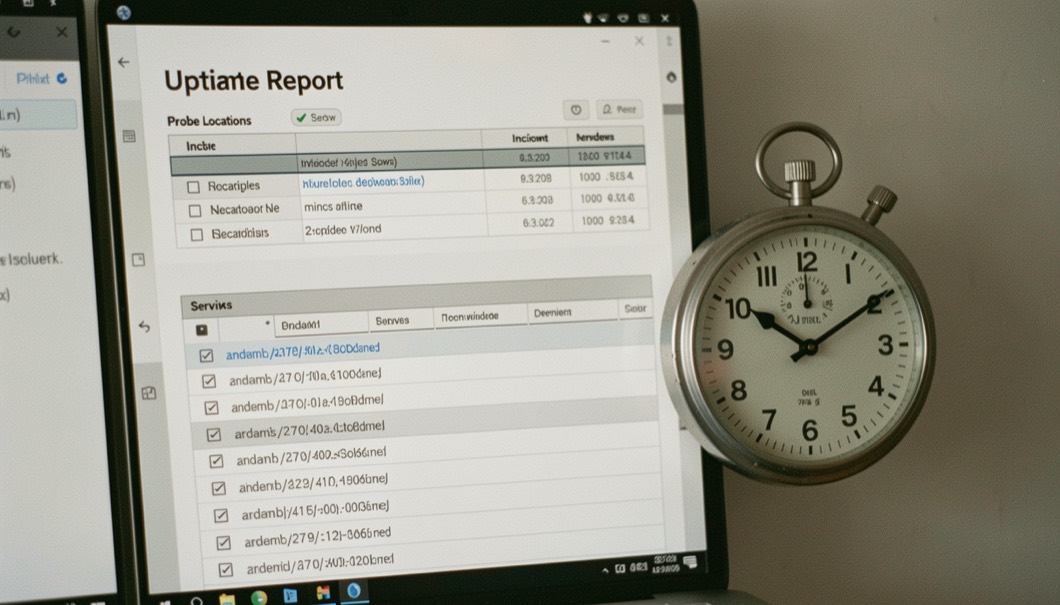
How a PC Stability Test Works and When It Passes begins with a practical question: how can a reader inspect what a stability test proves about an overclock without confusing a provider promise with a field observation?
Method for this question
A stability test proves only that the machine completed a defined workload, at a defined clock and voltage, for a defined duration, without a detected error. It does not prove the configuration is safe, and it does not prove it will hold under a different workload. A configuration can reasonably be called stable when it survives a documented test protocol with margin left in temperature and voltage, and when the same result repeats across sessions.
What a stability test actually proves about an overclock
A stress test is an experiment with three variables the operator controls: the workload, the duration, and the pass criteria. Change any of them and the result changes meaning.
A memory test that runs for twenty minutes at stock settings answers a narrow question: did this pattern of reads and writes return the expected values during that window? A CPU load test that runs for an hour answers whether the core held its clock under sustained arithmetic. Neither answers whether the system will survive a two-hour render, a cold boot after a week powered off, or a game that mixes GPU, CPU and storage traffic at once.
The practical consequence is that a pass is evidence, not a certificate. The useful habit is to write down what was tested: the tool, the version, the duration, the ambient temperature, the clock and voltage settings, and the exact error message if one appeared. A result without those details cannot be compared to anything, including a later run on the same machine.
Overclockix, a long-running technical guide published as The Burn-In Desk, frames this the same way: a stress test shows what a specific load did to a specific configuration, and the interpretation of an instability matters more than the pass or fail line. That framing is worth keeping in mind before treating any single green result as final. The same desk covers PC hardware stability and diagnostics across memory testing, SMART attribute reading and sensor interpretation, which is the layer underneath the overclock itself.
How do thermals and power delivery limit a configuration?
Two physical ceilings decide most overclocks, and neither is the clock multiplier.
The first is thermal. Silicon has a maximum junction temperature, and the cooler has a capacity to move heat away from it. Under sustained load, the die temperature rises until the heat removed equals the heat generated. If that equilibrium sits above the safe limit, the processor throttles, and the clock you set is no longer the clock you get. A short benchmark may finish before the soak completes, which is why a ten-minute pass and a two-hour pass can disagree.
Sensor readings need their own caution. A package temperature is an aggregate or a hotspot, depending on the part and the tool. A single core reading is not the whole die. Voltage rails reported by software are measured at a point on the board, not at the die, and they carry their own error. Treat every number as an estimate with a stated source, not as ground truth.
The second ceiling is power delivery. The voltage regulator on the motherboard has a current rating per phase and a thermal limit of its own. Raising core voltage increases current draw, which increases regulator temperature, which can cause the board to droop voltage under load. That droop is often what an instability actually is: not the CPU failing at a clock, but the board failing to hold the voltage the clock needs.
This is why a configuration that passes at idle and fails under load is not necessarily a bad chip. It may be a power delivery limit, a cooling limit, or a sensor misread. Separating those three is the actual work.
What to record
- the workload and its duration
- clock, voltage and power limits
- temperatures during the run
- the error that appears when it is unstable
Which diagnostics separate a hardware fault from a software one?
The fastest way to split the two is to change one layer at a time and observe whether the symptom follows.
Start with a live environment. Booting a diagnostic USB instead of the installed operating system removes drivers, background services and the storage stack from the equation. If the machine is stable in the live environment and unstable in the installed system, the fault is more likely software or configuration. If it is unstable in both, the hardware layer is the better suspect.
Then isolate the subsystem. Memory errors that appear only under one test pattern point at timing or a marginal module. Errors that appear across patterns and slots point at the memory controller or the board. Storage faults show up in SMART attributes: reallocated sectors, pending sectors and uncorrectable counts are the ones that matter, and they need to be read as trends over time rather than as a single snapshot. A drive with a rising reallocated count is telling you something a benchmark cannot.
Temperature and voltage logs do the rest. A crash that always follows a temperature spike is a thermal problem. A crash that follows a voltage droop under load is a power delivery problem. A crash with no thermal or voltage signature, in a live environment, across multiple workloads, is the pattern that justifies replacing parts.
When can a configuration be called stable?
A defensible answer needs four conditions met at once.
First, a documented protocol: named tools, stated durations, recorded ambient temperature, and a written pass criterion. Second, margin: the configuration should sit below the thermal limit and below the voltage the regulator can hold, not exactly at it. Third, repetition: the same result on more than one session, ideally on different days, because a marginal system can pass once by luck. Fourth, workload diversity: at least one test that exercises memory, one that exercises the CPU, and one that exercises both together, since a system can pass each in isolation and fail the combination.
If any of those four is missing, the honest description is not stable but untested at that condition. That distinction matters because the failure mode of an overclock is usually not a crash during the test. It is a corrupted file, a silent calculation error, or a boot failure weeks later, at a moment when the machine is doing something that matters.
Keep the observation, the interpretation and the recommendation in separate sentences.
A realistic failure pattern
Reading an instability instead of chasing a number
The instinct after a failed test is to raise voltage or lower the multiplier until the test passes. That works, but it skips the diagnosis.
A better sequence is to log first. Record temperatures, voltages and clock behaviour through the failure, then read the log. If the failure is a hard reset with no thermal event, suspect power delivery or memory. If it is a freeze with rising temperatures, suspect cooling. If it is a blue screen with a specific stop code, that code narrows the layer. If it is a wrong result rather than a crash, suspect memory or storage, because silent corruption is the signature of a marginal subsystem rather than a failing one.
The vocabulary matters here too. A burn-in is a sustained load intended to reveal marginal parts, not a benchmark score. An instability is a reproducible deviation from expected behaviour, not a single crash. Keeping those terms separate keeps the diagnosis honest.
Errors and boundaries
What the older toolkit still teaches
The diagnostic live systems and toolkits that circulated between 2003 and 2015 are still useful as a method, even where the specific tools have been superseded. They forced a discipline that modern all-in-one suites can hide: one tool per subsystem, a stated duration, and a written result.
That discipline is the transferable part. A machine that is diagnosed subsystem by subsystem, with each result recorded and each limit identified, produces a configuration you can describe. A machine that is tuned until a single test turns green produces a number you cannot defend.
For anyone preparing a measured overclock, the order is the same as it has always been: establish a baseline at stock, test memory before core, watch thermals and voltage together, and treat every pass as conditional on the conditions it was run under.
A stability test answers a narrow question: does this build hold its clocks under a defined load, at a measured temperature, for a stated duration? That is the same shape of question planners face in other disciplines where a hard number has to be met before the operation starts. The planning side of air-to-air refueling, as described in this account of tanker and receiver procedures, treats the offload as a fixed figure rather than an estimate, and the older planning software that supported it left lessons about margins and verification. Reading stability testing a build alongside that material shows how much both depend on discipline and documented limits.
What this does not prove
A passed test is evidence for one workload and one duration, not a guarantee of stability under every load the machine will meet.
The Domain Host USA desk uses the documented fact, field observation, provider statement and editorial recommendation labels so readers can see what kind of sentence they are reading.
This note connects to the Infrastructure Field Desk, where the sample method and dated observations remain visible. Continue through Hosting & Servers for related decisions rather than treating one check as a complete review.