A CDN changes the path, not the responsibility
A way to inspect edge cache, origin headers, bypass rules and purge behavior before calling a page fast.
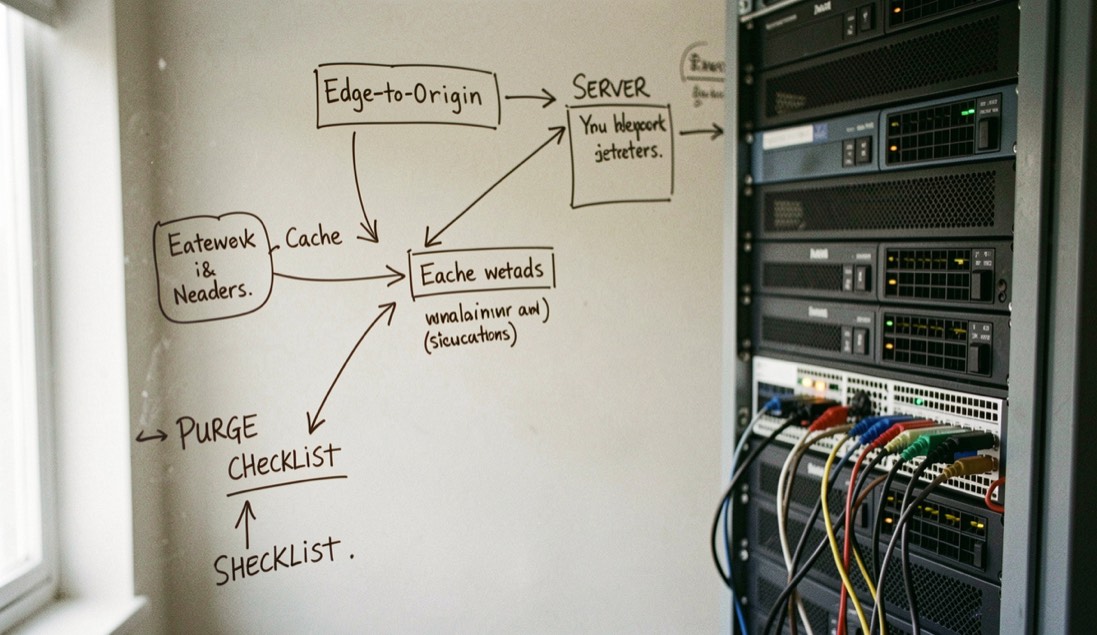
A CDN changes the path, not the responsibility begins with a practical question: how can a reader inspect edge behavior and origin visibility without confusing a provider promise with a field observation?
Method for this question
Draw two paths: a cacheable public request through the edge and an uncached or personalized request to the origin. For each, record URL, method, status, cache status, Age, Cache-Control, Vary, ETag, response size and timing. Identify which headers the CDN honors, which cookies bypass caching and how purge requests are scoped. Keep the origin hostname private when possible, but test it from a controlled network during diagnosis. The purpose is to explain the path, not to award a fast page a universal performance label.
What to record
- cache status and age
- vary and cache-control headers
- origin response and bypass paths
- purge scope and stale content behavior
A cache problem can be stale content, a permanent miss, an unsafe hit or an origin bottleneck. Repeat the same request with a cache-busting query only when the CDN’s rules make that meaningful, then compare a warm request with a cold one. Inspect whether cookies, authorization headers or Vary create separate objects. For an origin issue, compare TTFB and server logs while bypassing the edge safely. Purge one URL or tag, verify the new content, and record how long the old object remained visible.
Keep the observation, the interpretation and the recommendation in separate sentences.
A realistic failure pattern
A publisher updates an article but readers keep seeing the old image. The edge caches HTML and the image under different keys; the editor purges only the page path. The diagnostic is to inspect Age, ETag and cache status for both URLs, then purge the image or change its versioned filename. A logged-in editor sees fresh content because a cookie bypasses cache, which explains the misleading internal test. The operational fix includes a release checklist for HTML, media, API responses and purge ownership.
Errors and boundaries
A CDN can reduce origin work without fixing a slow database, and a fast cached homepage says little about a personalized dashboard or API. Never cache responses containing private data without a deliberate key and policy. Purging everything can create an origin surge and erase useful evidence. Provider cache statuses are not identical, so retain raw headers and the request time. The field method is a diagnostic baseline; validate cache rules with application owners and load testing before making a high-traffic change.
A CDN changes the path a request takes, not who owns the result, and the same holds below the network stack. Cache rules, origin headers and purge behavior decide what a visitor receives, while the physical link decides whether the packet arrives at all. When a link misbehaves, the useful questions are about lane width, link training state and what the PIPE interface passes between controller and PHY. That page covers PCIe lanes, LTSSM training and the PIPE interface, the layer beneath the edge checks described here.
What this does not prove
A cached homepage can be fast while logged-in pages, APIs and uncached origin paths remain slow.
The Domain Host USA desk uses the documented fact, field observation, provider statement and editorial recommendation labels so readers can see what kind of sentence they are reading.
This note connects to the Infrastructure Field Desk, where the sample method and dated observations remain visible. Continue through Security & Performance for related decisions rather than treating one check as a complete review.